
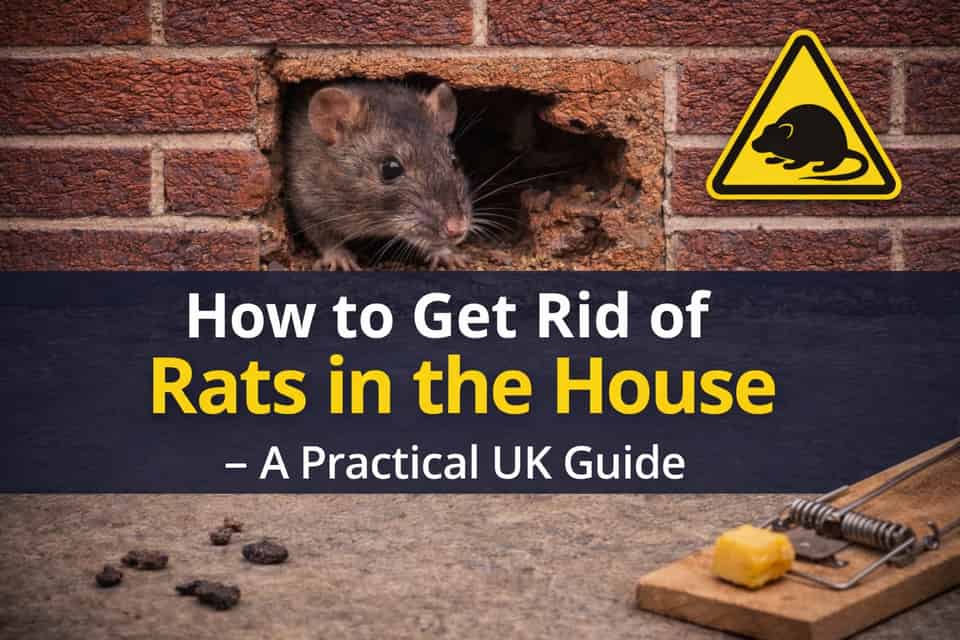
How to Get Rid of Rats in the House – A Practical UK Guide

Martin Gregory
How to Get Rid of Rats in the House – A Practical UK Guide
I've spent years crawling through lofts, lifting floorboards, and pulling out kitchen units to deal with rats in UK homes. The calls usually start the same way: someone's heard scratching in the walls, or they've found droppings under the sink, and they've tried a few traps from the hardware shop without much success.
Rats are clever, adaptable, and surprisingly persistent. Getting rid of them isn't just about putting down poison and hoping for the best. I've seen people spend hundreds of pounds on products that don't work because they haven't addressed why the rats are there in the first place.
This is what I've learned works, what doesn't, and why.
Why rats come into houses
Rats don't want to live with you. They want food, water, warmth, and somewhere safe to nest. If your house provides these things, they'll find a way in.
Most UK homes give rats at least two of those four requirements without the homeowner realising it.
Bird feeders are a common culprit. Spilled seed on the ground brings rats into gardens, and once they're there, they start looking for shelter nearby.
Compost heaps and food waste bins that aren't properly sealed do the same job.
Pet food left out overnight, even in a bowl on the kitchen floor, is an open invitation.
But it's not just about what attracts them. It's about how they get inside.
Rats can squeeze through gaps the width of a £1 coin. They climb surprisingly well, and they'll gnaw through wood, plastic, and even soft metals if it gives them access.
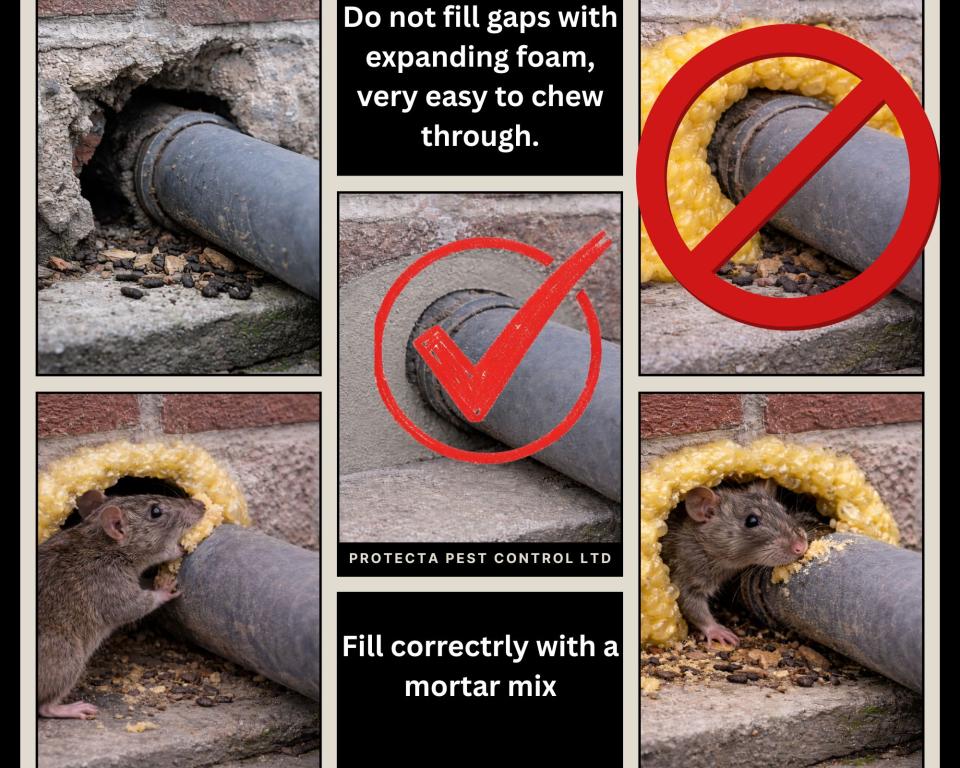
Gaps around pipes where they enter the house are one of the most common entry points I see. Builder’s foam degrades over time, and rats will chew straight through it
Airbricks with damaged grilles let rats into cavity walls and under floors.
Damaged soffit boards or gaps where the roof meets the wall give them access to lofts.
Once they're inside a cavity wall or under the floor, they can travel through the entire house without you seeing them.
Warning signs people miss
Most people only notice rats when the problem's already established. By the time you hear scratching at night, there's usually more than one.
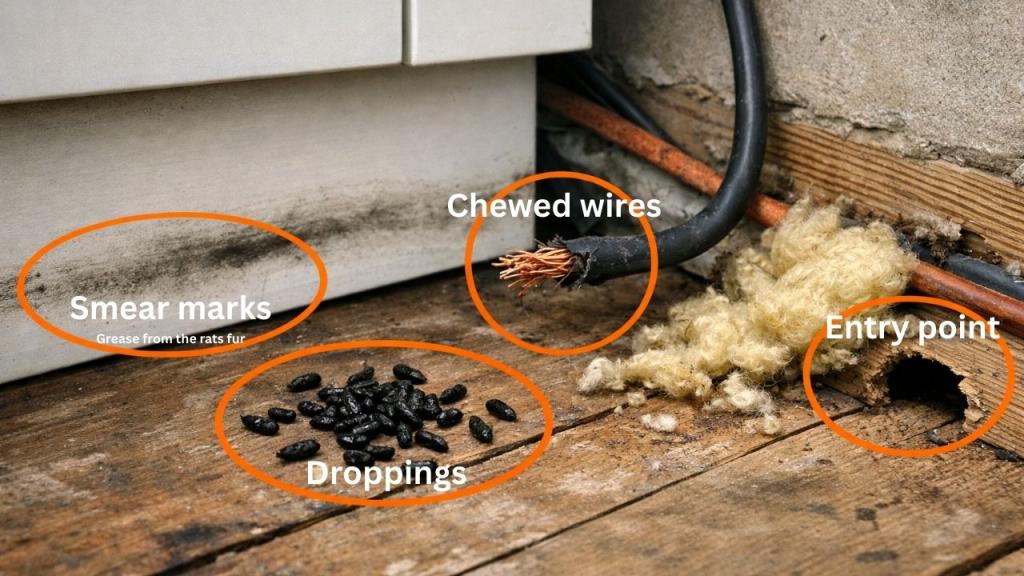
Droppings are the obvious sign. Rat droppings are about the size and shape of a currant or raisin, dark brown or black, and tapered at both ends. Fresh ones are soft and shiny. Old ones are dry and crumbly.
But there are other signs that get overlooked.
Greasy smear marks along skirting boards and walls show where rats are running.
Gnaw marks on wood, plastic, or cables mean rats are actively enlarging entry points.
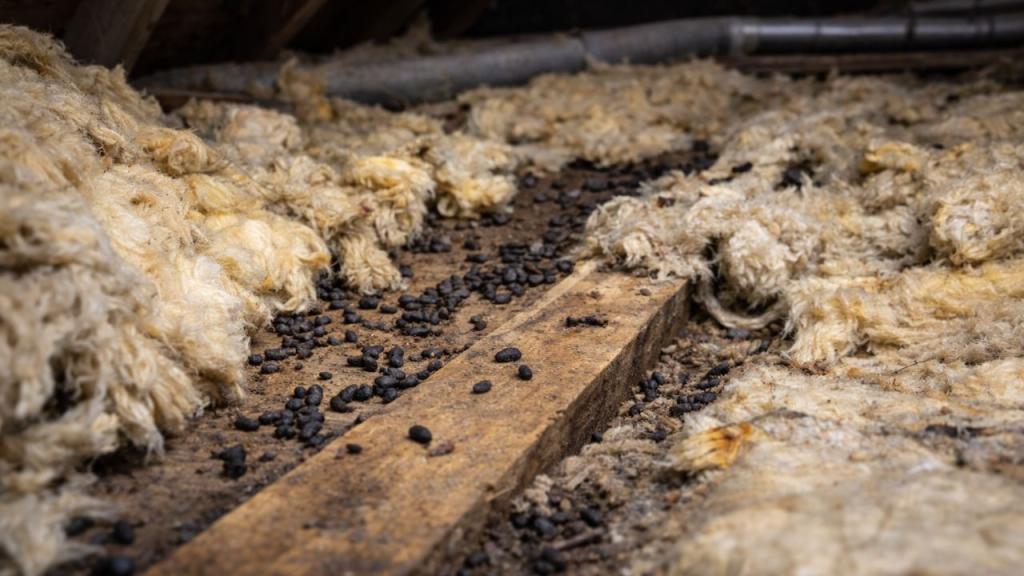
Shredded insulation, paper, or fabric in lofts or under floors indicates nesting.
A strong, musty smell in enclosed spaces often means rats have been there for a while.
If you're hearing rats during the day, the infestation is usually large enough that they're competing for space and food.
Why DIY attempts fail
I've lost count of how many times I've arrived at a house where someone's already tried to deal with the rats themselves.
The problem is usually one of three things.
First, they haven't found the entry points, so killing rats inside doesn’t stop more coming in Second, they've used the wrong method in the wrong place. Snap traps work, but only when positioned along runs.
Chocolate spread works better than cheese. Rats are cautious. If a trap is out in the open, they’ll avoid it.
Third, poison is often misused. Putting poison down without sealing entry points just invites more rats inside.
There’s also the issue of dead rats. Poison does not make rats leave to die. They usually die inside cavity walls or under floors, causing smells that can last weeks.
What actually works
Getting rid of rats properly means following a process.
The first job is identifying how they’re getting in. I check pipe entries, airbricks, and roof edges. Inside, I look for droppings and smear marks to identify active routes.
Once entry points are found, they’re sealed using mesh, metal plates, and fixings rather than foam. After proofing, I deal with the rats already inside
Traps work well when numbers are low and placement is correct.
Poison is better for larger infestations, but only when used in secure bait boxes and monitored properly
The final step is prevention.
Move bird feeders away from buildings.
Store pet food securely.
Keep compost away from walls.
Secure food waste bins.
Clear fallen fruit.
These steps won’t guarantee rats never return, but they make your property far less attractive than nearby options.
Risks you should know about
Rats carry diseases
Leptospirosis is the main concern in the UK. It’s rare but serious.
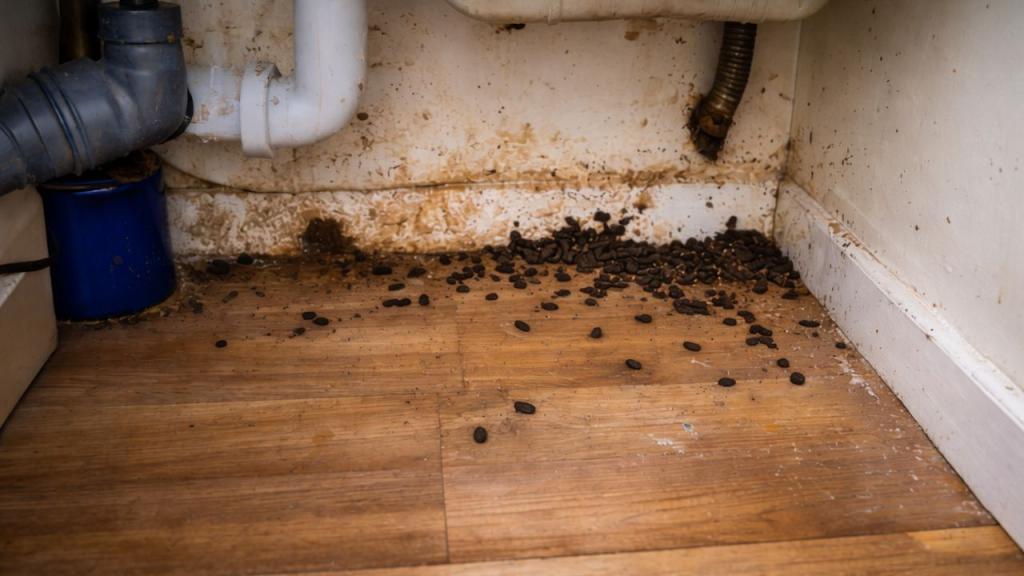
Droppings and urine can trigger asthma and allergic reactions.
Rats also cause structural damage. I’ve seen chewed cables that posed fire risks and gnawed pipes that caused leaks.
All ways Wear gloves and a mask when handling traps or droppings. Dispose of dead rats double-bagged in general waste.
Next steps
If you’ve got rats, start by identifying where they’re getting in and what’s attracting them.
If you’re not confident doing that yourself, look for a technician registered with the NPTA like Protecta Pest Control Ltd
This is usually where people decide to get help.
Contact
If you’re dealing with rats in your home and want it handled properly, you can speak directly to Gregg at Protecta Pest Control Ltd.
We cover domestic properties, businesses, and farms across Chesterfield and Derbyshire
📞 07398 674924
Most rat problems can be resolved within a few weeks when the approach is thorough. Leaving it longer only makes the damage worse.